
Where to Find the Best Halal Food in Morocco’s Bustling Souks
Step into any souk in Morocco and the first thing that hits you is not the color, it’s the smell. Charcoal smoke curling off lamb skewers, the sharp warmth of cumin drifting from a tagine cart, the sweetness of msemen sizzling on a griddle. Morocco’s medinas are not just markets; they are living, breathing kitchens. And because Morocco is a Muslim-majority country, virtually everything sold on the street or in the market is halal by default. Yet knowing where to eat still makes all the difference between a memorable meal and a forgettable one.
“In Morocco’s souks, halal food is not a category. It’s simply food. The challenge is finding the stall where the grandmother has been perfecting her recipe for forty years.”
Marrakech: The Djemaa el-Fna Food Theatre
No conversation about halal food in Morocco begins anywhere other than Djemaa el-Fna. By night, the square transforms into the world’s largest open-air dining room. Smoke-blackened carts line up shoulder to shoulder, each one run by families who have held their numbered pitch for generations. Lamb merguez, slow-cooked sheep’s head, and harira soup thick with lentils and tomato, it’s a pilgrimage site for anyone serious about Moroccan cuisine. The best approach: walk the entire row once before committing. Let the smells guide your feet.
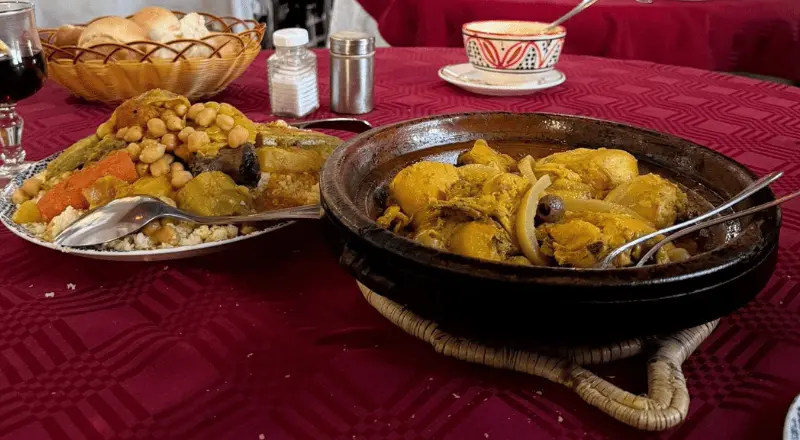
For a sit-down experience, the narrow lanes off Rue Riad Zitoun el-Jedid hide some of the finest halal restaurants in Morocco, where slow-cooked lamb bastilla and saffron-laced chicken tagine arrive in hand-painted clay pots at prices that embarrass their five-star competitors.
Fes: Where Tradition Runs Deepest
Fes el-Bali, the world’s largest car-free urban area, is a maze of over 9,000 alleys, many of which dead-end into extraordinary kitchens. The Medina’s food culture here is arguably more preservationist than anywhere else in the country. You will find halal restaurants in Morocco’s spiritual capital that still cure their own olives, press fresh argan oil, and age preserved lemons on-site. Look for steaming pots of bissara, a thick fava-bean soup drizzled with olive oil and paprika, sold at tiny street-level windows from dawn.
Souk Eating: Quick Guide
Eat where locals queue. Lunch (12–2 PM) is the main meal. A full tagine with bread and mint tea should cost 40–80 MAD. Avoid pre-set tourist menus on main squares; the best halal restaurants in Morocco are always one alley deeper.
Chefchaouen & Beyond
The blue city trades tagine for kefta, ground beef rolled with herbs and grilled over charcoal. The mountain air sharpens everything: the mint in the tea, the coriander in the chermoula. Small family-run dars around the medina’s central Plaza Uta el-Hammam serve breakfasts of msemen, honey, and amlou (an almond-argan paste) that rival any hotel spread, for a fraction of the cost.
5 Dishes You Must Track Down
- Pastilla — flaky pigeon (or chicken) pie dusted with powdered sugar and cinnamon
- Mechoui — whole slow-roasted lamb, sold by weight at dedicated mechoui stalls
- Harira — the restorative lentil-and-tomato soup, especially during Ramadan
- Briouats — fried parcels stuffed with spiced minced meat or almond paste
- Makouda — potato fritters, the souk’s answer to fast food, sold hot and crispy
Morocco’s souks deliver something rare: a food culture where halal restaurants in Morocco are not a niche market but the everyday norm. The challenge then is not finding halal food, it’s finding the patience to slow down, pull up a plastic stool, follow the smoke, and let a stranger’s grandmother convince you that her tagine is the finest in all of Morocco. Walk in without a plan, eat what the locals are eating, and you will never go wrong.
Morocco’s flavors are best discovered with the right guide by your side. Dawn Travels crafts authentic Moroccan food and culture experiences tailored just for you. Get in touch and start your journey.