
Exploring Qusayr Amra, Jordan—A UNESCO World Heritage Wonder
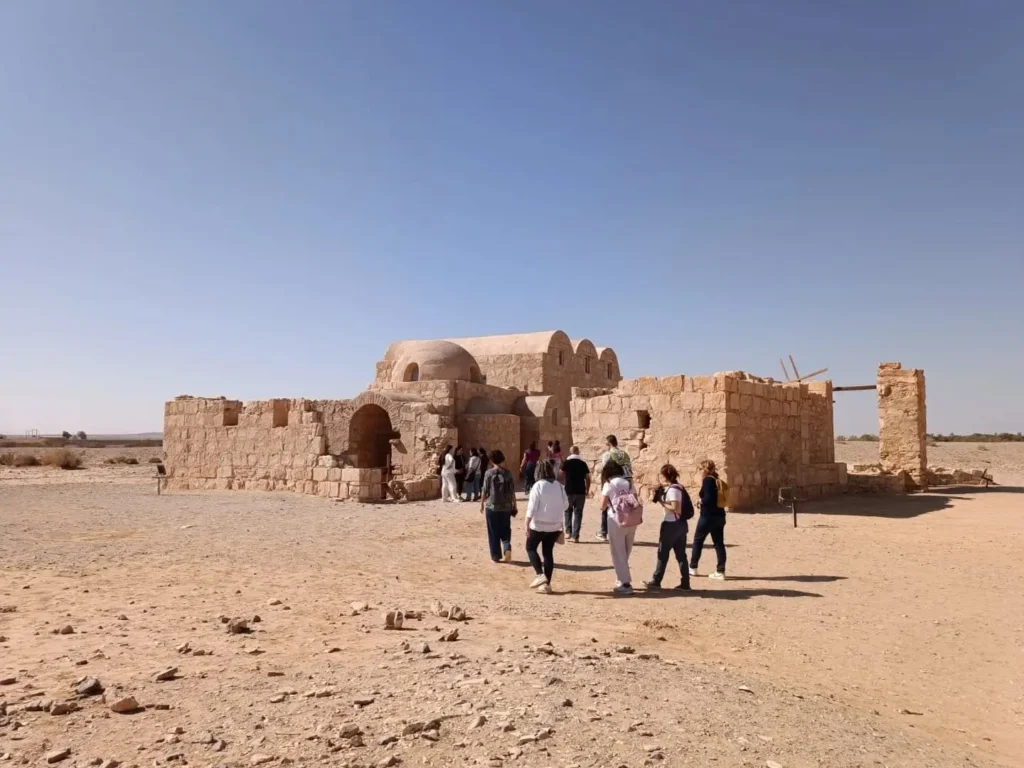
Nestled in the dry desert plains of eastern Jordan is one of the most interesting sites in all of Jordan’s history—Qusayr Amra, Jordan. When looking at the small structure that appears to be made of sand-colored bricks, it doesn’t look any more striking than any other structure in the area you might see. True, Petra or the Dead Sea are much more spectacular, but once you walk into the small building, you will be transported back 1000 years to a time of art, pleasure, and royal comfort. Qusayr Amra is recognized as a UNESCO World Heritage Site, and it is a delightful insight into early Islamic culture and the life of the Umayyad dynasty.
A Glimpse into Qusayr Amra’s History
The Qusayr Amra history dates back to the early 8th century during the ruling of the Umayyad caliphs, one of the first Islamic dynasties after the Prophet Muhammad. The building is constructed between 723 and 743 AD; it is thought that this building was a desert retreat, or qasr, for the Umayyad princes. The royal rulers would leave the hustle and bustle of the cities to go to the desert to rest, hunt, and entertain themselves.
Qusayr Amra was once associated with a larger complex that included a palace, a watchtower, and a water system, yet today only the bathhouse remains intact and in good condition. The impressive aspects of Qusayr Amra are not about its buildings, but about what is taking place on its walls. The walls and ceilings are decorated with colorful walls that have endured the rigors of wind and sand as well as neglect for a very long time. These paintings are among the best examples that survive from early Islamic art and they point to both the cultural sophistication of the society and its worldly influences.
The Art and Architecture of Qusayr Amra
Upon entering Qusayr Amra Jordan visitors will likely be surprised by the imagery. Unlike later Islamic art, which would shun human figures, these walls depict people and animals as well as depict mythological subjects. You can find images of musicians, hunters, and bathers, vignettes of sophisticated pleasures. The “Six Kings,” a well-known piece depicts kings from various nations bringing tribute to the Umayyad caliph. Possibly the most stunning decoration is across the entire domed ceiling showing the constellations and zodiac as probably one of the oldest known celestial maps still surviving in Islamic art.
Qusayr Amra is equally impressive from an architectural perspective. The bathhouse is constructed like Roman and Byzantine thermal baths with a cold room, warm room, and hot room that were heated by an advanced underground hypocaust system. This combination of Roman invention and Islamic aesthetics underscores the cultural exchange that were hallmarks of early Islamic culture.
Visiting Qusayr Amra Today
At present, Qusayr Amra is one of the best-preserved examples of early Islamic architecture in the eastern desert of Jordan. And situated 85 kilometers east of Amman, the site is easy to reach as part of a day trip along the “Desert Castles Route” which also offers stops at Qasr al-Kharana and Qasr al-Azraq. While Qusayr Amra’s simple exterior invites little intrigue, the colorfully decorated interior space is intricate and serves as a lesson of not judging appearances.
Standing beneath the painted domes of Qusayr Amra’s bathhouse, it is easy to envision the talk, music, and laughter that likely filled the hall. Qusayr Amra’s significance does not only relate to a building, but to feelings, as a sharer of a rich cultural openness, artistic innovation, and the regal languor of life in the desert.
For the traveler seeking to experience the rich historical context of Jordan, Qusayr Amra is more than a notch on a stick; it is an everlasting portal into a time and place where rich artistic expression and empires collided under the desert sky.
Dawn Travels is one of the top tour operators in the United States of America, providing its best services against Hajj, Umrah, and tour packages from USA.