
Cairo’s Historic Fortress
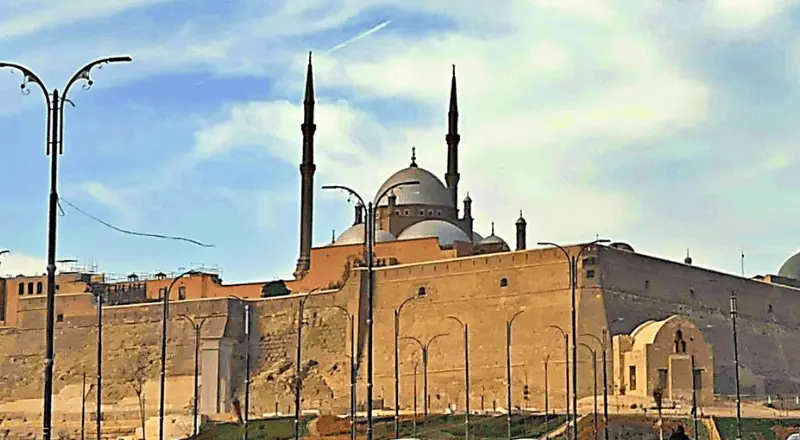
The Salahuddin citadel in Cairo has long been one of Egypt’s most important historical sites. Built by the Muslim leader Salah ad-Din in 1176, it was constructed as a fortification against the Crusades and to be an administrative stronghold for the city of Cairo. The construction of the citadel marked a major milestone in Cairo Citadel history, as it enabled the protection of Cairo and the neighboring town of Fustat through a single network of fortifications. Because of its strategic location on the Mokattam Hills, the Saladin Fortress in Egypt quickly became the strongest fortification in the region.
The construction of the Salahuddin citadel marked an important stage in Cairo citadel history and reflected Salahuddin’s vision of controlling both Cairo and the surrounding region. While the citadel was built as a military fortress, it served as an important political statement regarding the authority of the Sultan and the growth of Islamic power in Egypt as well as the determination of the Sultan to protect his capital city.
Military Strength and Strategic Importance
The Saladin fortress in Egypt was constructed during the 12th century with numerous impressive defensive characteristics based on the military needs at that time. Among these features were the large and massive walls made of limestone, tall and thick towers, and the fortifications along entrances from outside sources to limit or block access to support for an attack by enemy forces. The fortress was very high in elevation and gave the military a clear line of sight toward the enemy and also controlled the roadways leading into the city.
The benefits of this strategic location were also critical to the design and construction of the historical architecture of the Cairo Citadel and demonstrate how geographic advantages and engineering techniques were used to design and create a strong and safe fortified area.
As the Saladin fortress in Egypt continued throughout the years, the new owners added new structures, such as towers, walls, and other defensive structures. The military importance of the Salahuddin citadel throughout the ages helped make Cairo safe for many centuries, thereby establishing it as one of the key historical landmarks in Cairo.
A Masterpiece of Islamic Architecture in Cairo
As a fortress originally built for military purposes, the citadel has developed into a marvelous example of modern Islamic architecture in Cairo since its inception. Throughout the dynasties of Mamluks and Ottomans, many of the fortresses’ structures (mosques, palaces, etc.) have been rebuilt and redeveloped, thus combining strength of arms and aesthetic beauty into one unified entity. This evolution continues today with many structures being rebuilt/renovated depending on the type of economic and social conditions that exist.
One of the most recognizable buildings in the entire complex is Muhammad Ali’s Mosque, built in a classical Ottoman style in the 19th century, which rises prominently against the skyline of Cairo due to its tall minarets and large domes. It is an extraordinary example of Islamic architecture in Cairo that millions of visitors can appreciate today. It is one of Cairo’s most photographed monuments, serving as a defining example of the grandeur of the Saladin fortress in Egypt.
Political and Cultural Center
The Salahuddin Fortress has functioned as the home of every ruler in Egypt for nearly 700 years. The Sultan and the governors of the region controlled the city of Cairo and its surrounding territory from inside this fortress, which served as the administrative center of Cairo and the Egyptian government for this extended period of time. The Salahuddin Fortress was pivotal in the development of Cairo and the country of Egypt, with many of the critical choices made that would determine the future direction of Egypt and develop non-military aspects of the country being made inside the fortress itself.
The huge administrative buildings, royal residences, and religious buildings located within the Salahuddin Fortress illustrate that the fortress did not simply function as a military fortification but also as a place where the elements of governance, religion, and culture all met. The lasting importance of the Saladin Fortress in Egypt can still be seen today, as it remains one of the most significant historical landmarks in Cairo, Egypt, and a powerful example of Islamic architecture preserved through the centuries.