
The Story and Spiritual Significance of Bayt al Mawlid in Islamic History You Can’t Miss
Bayt al Mawlid, the name by which the birthplace of Prophet Muhammad (peace be upon him) is known, rests in the city of Makkah, where the legacy of faith is united with the legacy of history. For millions of Muslims the place holds great religious and emotional significance. It is much more than a historical site: it is a spot of divine mercy and guidance, the point in existence where mankind’s final Messenger (peace be upon him) entered the world.
The Story of Bayt al Mawlid
Bayt al Mawlid, or “House of the Birth,” is adjacent to the Holy Kaaba in Makkah. In the Year of the Elephant (c. 570 CE), Amina bint Wahb gave birth to her beloved child, Muhammad ibn Abdullah (peace be upon him), in this house. The occasion marked the arrival of the Prophet (peace be upon him), which noted the beginning of a new age in human history, ushering mankind into the light from darkness.
According to historical accounts, Prophet Muhammad (peace be upon him) was born in an unpretentious home, which signified the essence of simplicity and purity embodied throughout his life. Following the Prophet’s hijrah to Madinah and subsequent passing away, Muslims honored the sacred place for generations to come. In this way, it was preserved as a dignified space to remember and reflect upon the spiritual ancestry of their faith.
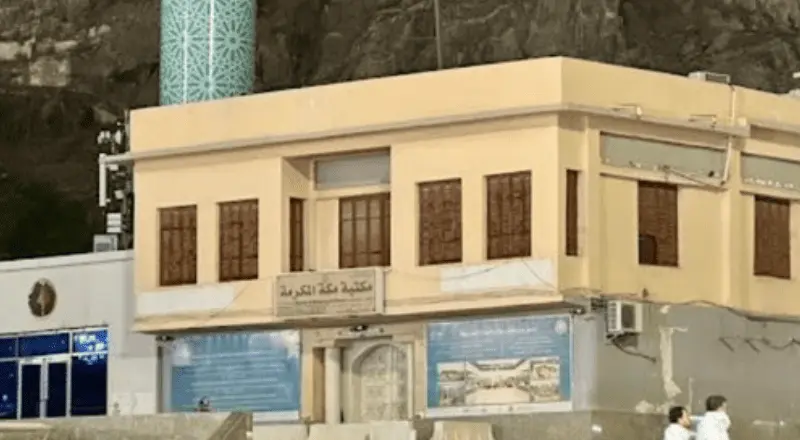
In other avenues during the various periods of Islamic rule, it was protected and then even transformed into Maktabat Makkah al-Mukarramah, a smaller library. Time and political family have altered the perception and functions of the buildings at that site, but the respect and gratitude remain indelibly engraved upon the hearts of the Muslims who visit Makkah.
The Spiritual Significance of Bayt al Mawlid
Bayt al Mawlid encompasses a spiritual significance greater than the physical location. For believers, it is the symbol of Allah’s mercy to the world, and, as a verse in the Qur’an beautifully states, “And We have not sent you, [O Muhammad], except as a mercy to the worlds.” (Al-Anbiya 21:107). Thus, this house is the literal birthplace of that mercy; it is where the one who would bring humanity towards compassion, justice, and faith first opened his eyes.
Experiencing or contemplating the birthplace of the Prophet Muhammad (peace be upon him) rekindles a genuine passion of love and gratitude. It is a nurturing reminder for Muslims of the lowly beginning of a man who would become the final prophet, a leader, and a source of light for nations. The story of Bayt al Mawlid encourages believers to embrace lowliness, simplicity, and devotion. The same qualities that constituted the character of the Prophet Muhammad (peace be upon him).
Preserving the Legacy
Though much modern development has changed the context around Bayt al Mawlid, its memory lives on in the hearts of millions of people. Scholars and historians maintain that we remember such places not as sites of commemoration or worship but as reminders of our common forebears in faith and our shared heritage.
To remember Bayt al Mawlid is, to contemplate the timeless message of the Prophet Muhammad (peace be upon him), one of unity, peace, and submission to Allah. Whether someone physically stands near to its place or comes to learn of its place or the story behind it, the effect is the same: a person is linked back to the Prophet Muhammad (peace be upon him), thus strengthening one’s faith.
The Bayt al Mawlid is more than just a historic house, and it is a symbol of hope and divine mercy. As the birthplace of the Prophet Muhammad (peace be upon him), it serves as a reminder to the Muslim Ummah of how the life of one man altered the direction of humanity. In the remembrance of this sacred site, believers are reminded to renew their love for the Prophet, emulate his example, and carry forward the light of his message. Indeed, to remember Bayt al Mawlid is not simply to remember history; rather, it is to remember the very beginning of guidance.